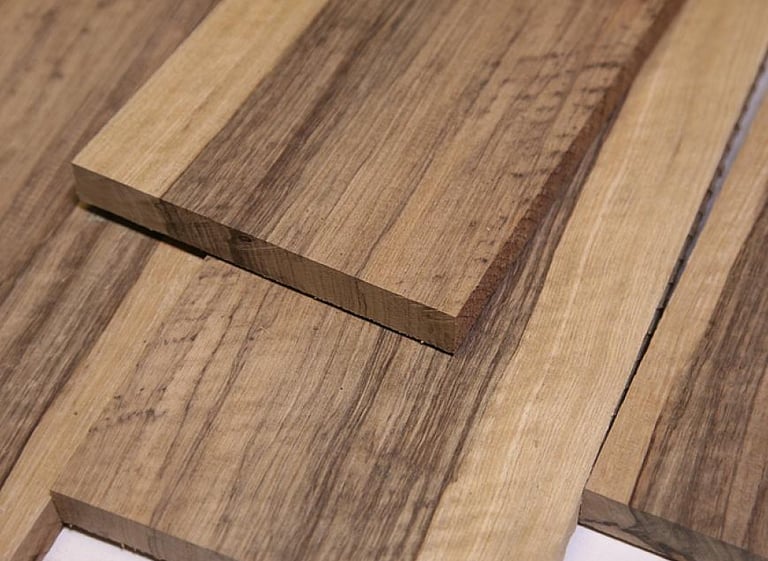
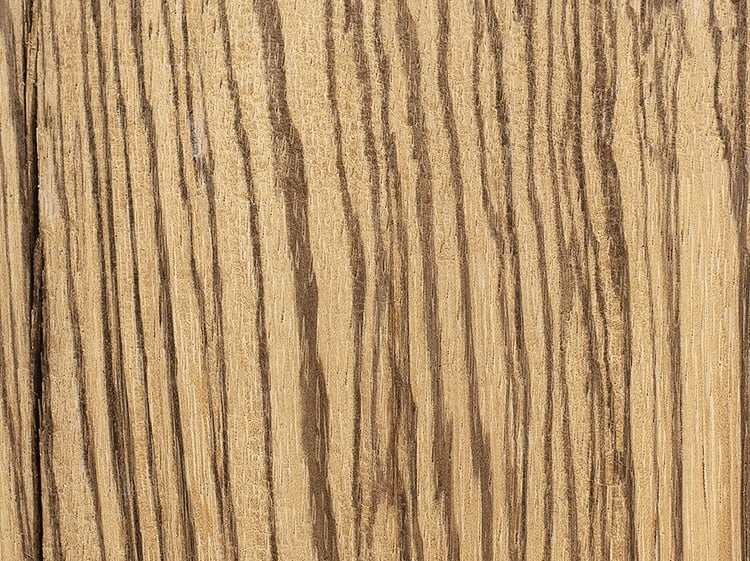
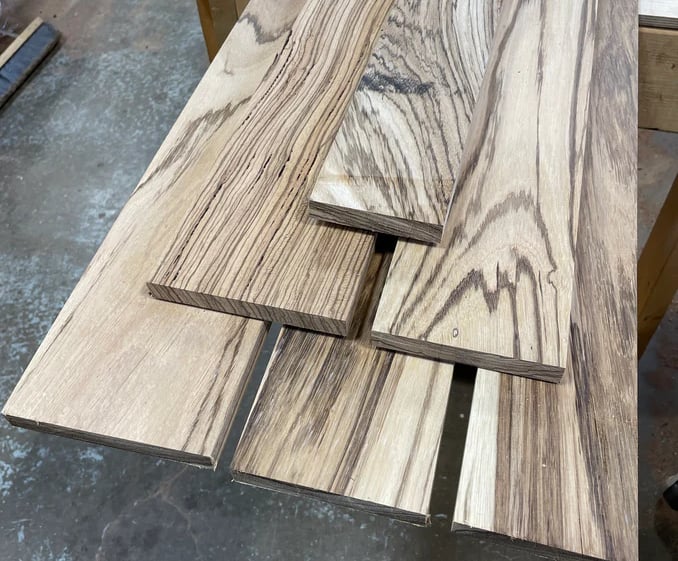
Zebrawood (Zebranowood)
Origins: West Africa
Common uses: Furniture, veneers, specialty items
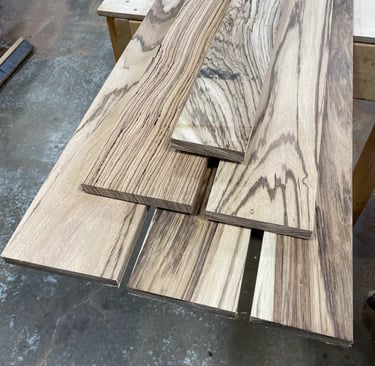
Appearance: Light brown and cream with dark brown to black streaks
Scientific name: Microberlinia brazzavillensis
There’s a reason why Zebrano (or Zebrawood) is one of the most popular, instantly recognizable African hardwoods.
So-called due to its dramatic, bold stripy appearance, Zebrano is one way to make a real statement. Whilst too much can be overbearing, its mixture of creams, browns and blacks make a fantastic decorative statement for furniture trims, veneers, wall paneling and guitars. It’s incredibly hard wearing. Many other types of wood try to use the name Zebrawood, so unless you choose carefully and discerningly, you’ll only be getting a pale imitation. The real deal comes from the Microberlinia brazzavillensis tree, which grows tall and straight up to 50 metres; it’s distributed throughout west Africa, notably Congo, Cameroon and Gabon.
Origins: Central and western Africa
Common uses: Flooring, furniture, paneling, as a veneer
Appearance: Dark brown with black streaks
Pronunciation: when-gay
Scientific name: Millettia laurentii
From the Cameroonian highland forests of central Africa, Wenge has a striking medium-to-dark brown hue, with black streaks and a straight grain. It’s a go-to choice for luxury furniture making and specialist joinery. As darker woods gain traction amongst architecturally-minded, this species steps up by combining classy good looks with exceptional physical durability. It’s a heavy, hard timber that can work well for flooring. It’s also naturally resistant to termite attack.
Authentic Wenge comes from the millettia laurentii, a legume tree native to central and western Africa, specifically Zaire, Cameroon, Gabon and Equatorial Guinea. Such is the popularity and uniqueness of this species, ‘wenge’ is even used as a color in its own right.
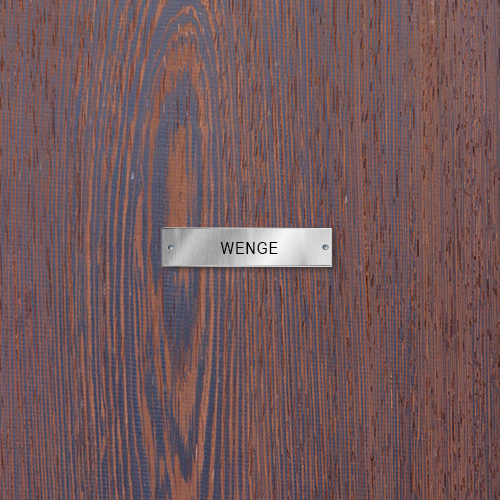
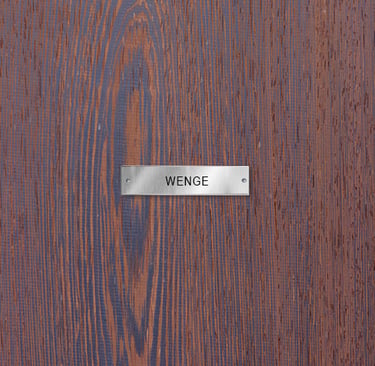
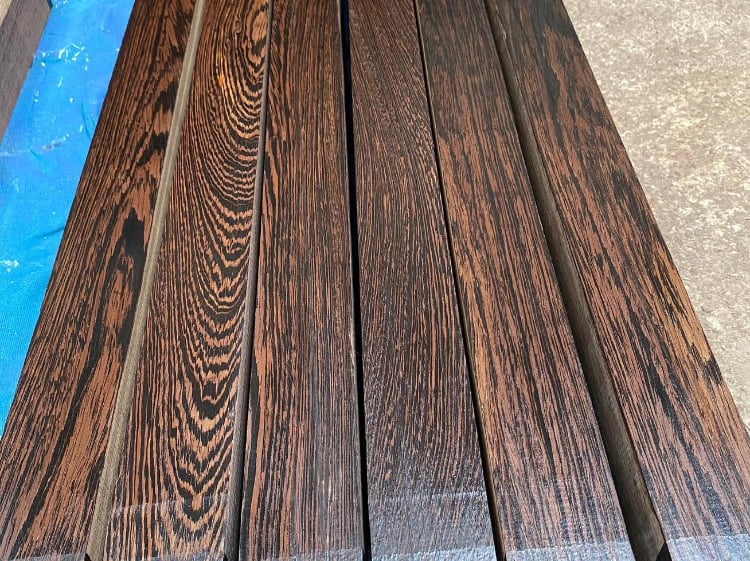
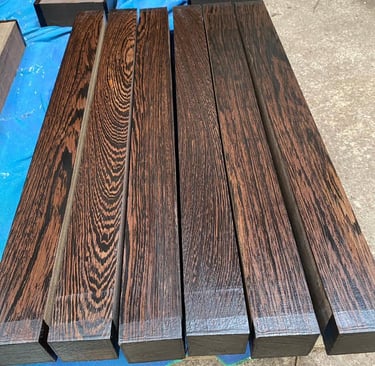
WENGE
Origins: West African tropical rainforests.
Common uses: Flooring, furniture, panelling, veneer
Appearance: Reddish-brown
Pronunciation: suh-pee-lee
Scientific name: Entandrophragma cylindricum
Another beautiful exotic choice, Sapele is cherished for its visual likeness to mahogany, and is often used as a substitute. It’s often referred to as ‘sapele mahogany’. This timber darkens with age, usually starting off as a pale yellow but eventually becoming an alluring reddish-brown.
The interlocking grain pattern delivers a pleasing, unique appearance. With exceptional durability, strength and rot resistance, Sapele makes a fantastic choice for a number of projects — furniture, veneers, musical instruments, panelling and even boatbuilding.
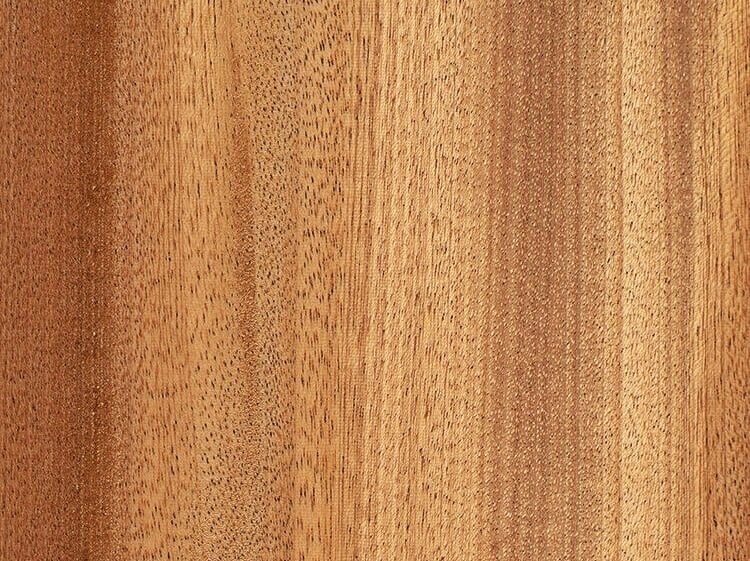
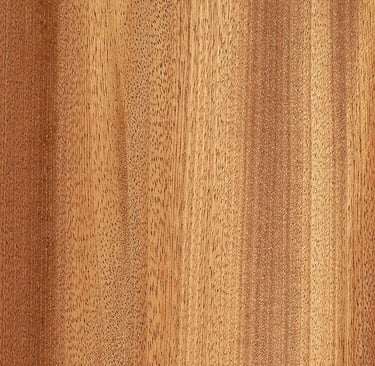
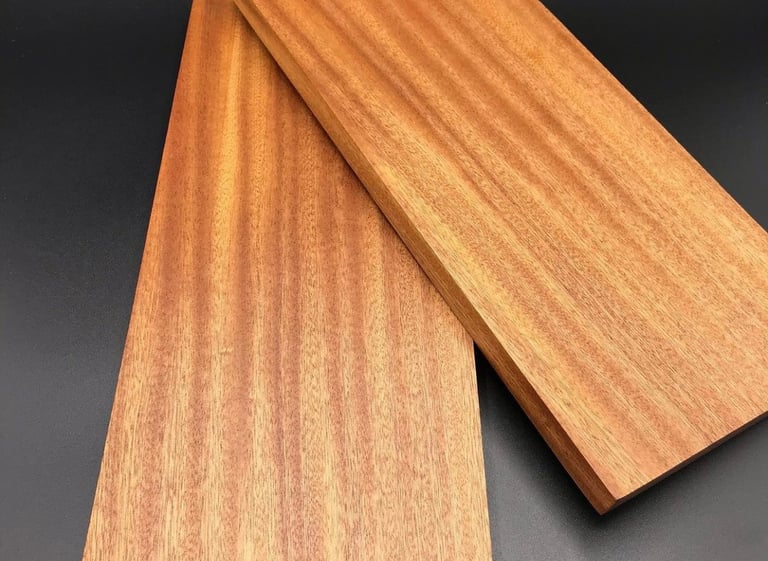
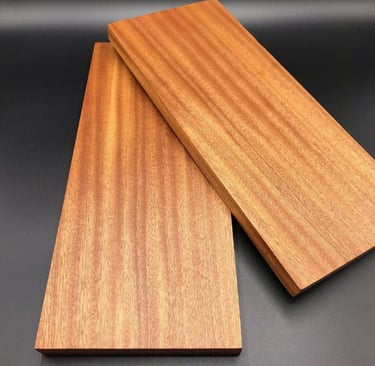
SAPELE
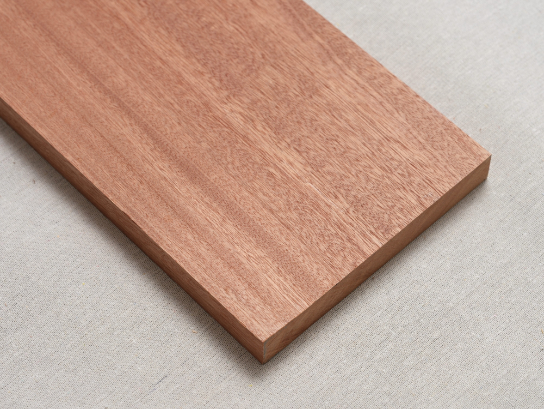
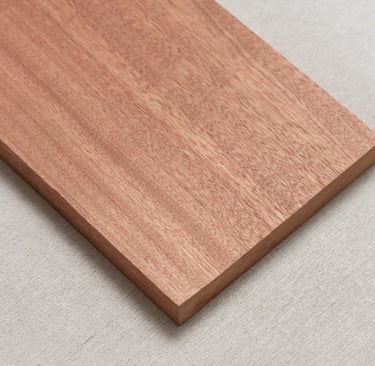
Origins: Tropical central Africa
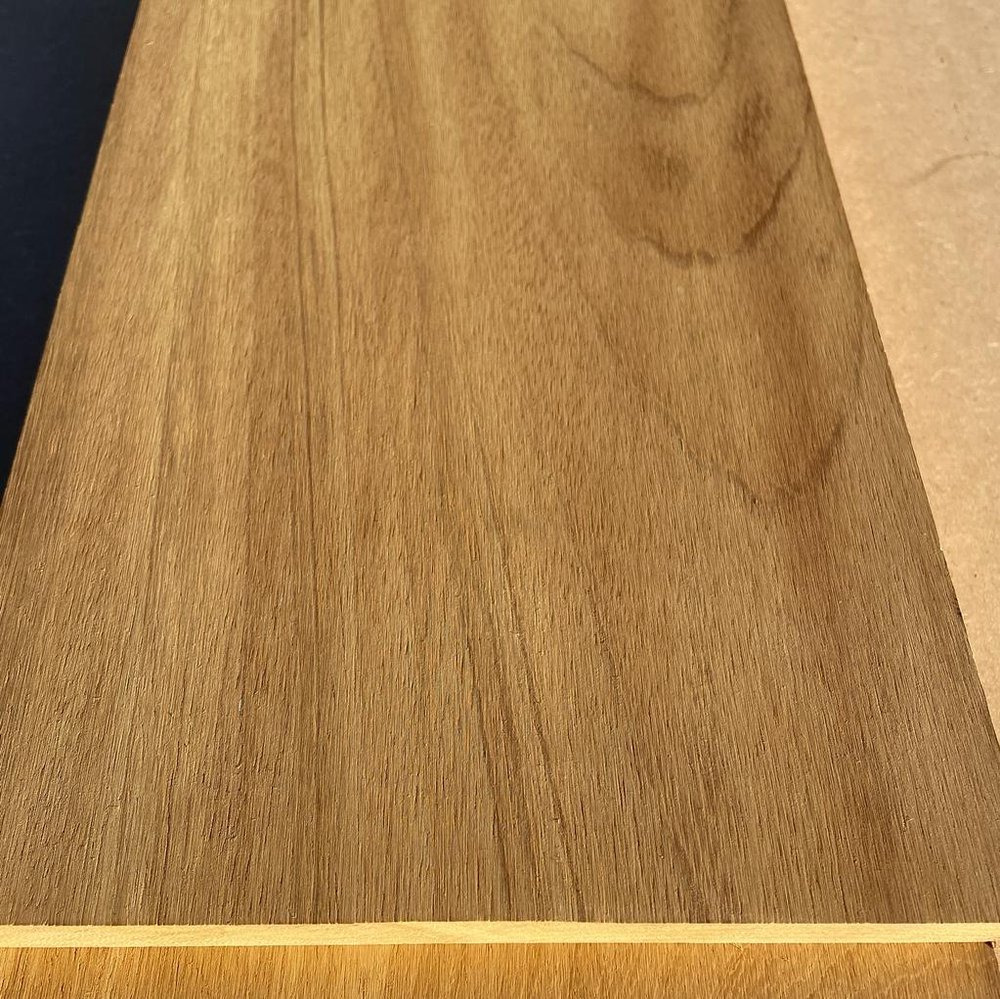
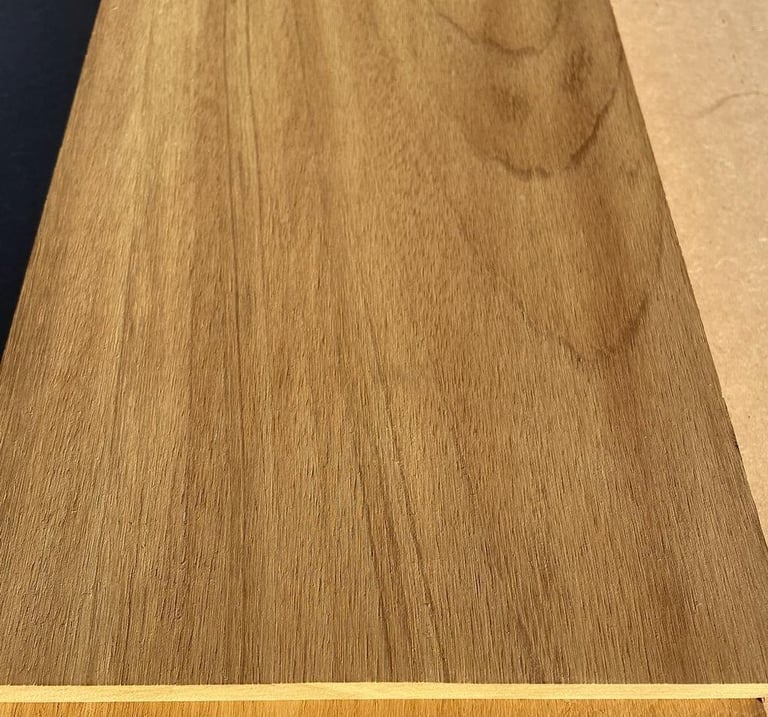
Common uses: Exterior decking, flooring, furniture
Appearance: Golden yellowish-brown
Pronunciation: i-row-kow
Scientific name: Milicia excelsa
Also known as ‘African teak’, Iroko is an extraordinarily durable, dense hardwood that’s resistant to insect attack. With exotic golden yellow-to-brown hues and excellent outdoor performance, it’s clear why this wood has another well-earned moniker: the ‘Rolls-Royce of decking’. Externally, it can also be used for fencing and is similarly at home indoors for flooring and furniture making.
IROKO
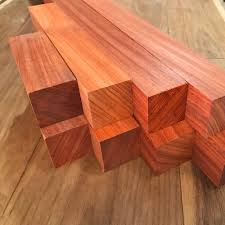
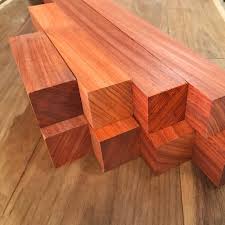
PADAUK
Origins: Central and west Africa
Common uses: Furniture, cabinetry, flooring, veneers, speciality items
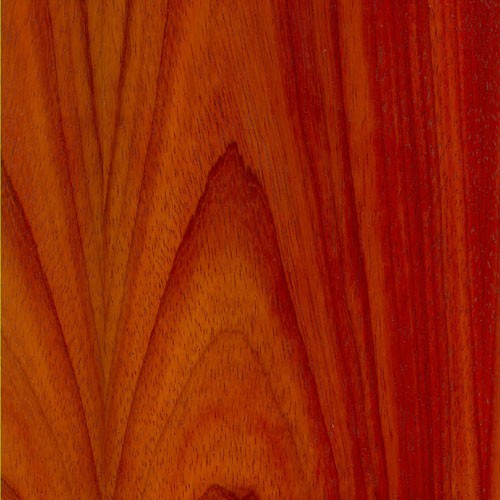
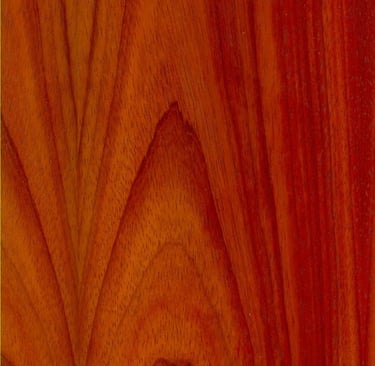
Appearance: Reddish-purplish brown
Pronunciation: pah-dook
Scientific name: Pterocarpus soyauxii
Hailing from the tall, dense rainforests of Cameroon, Congo and Nigeria, African Padauk is a strong, dense and heavy hardwood that’s popular for a range of interior applicationsA gorgeous timber, this species typically starts life with a vibrant reddish-orange color which tends to deepen significantly over time to a reddish-purple brown — perfect for luxury joinery and furniture making.
A Guide to Exotic African Hardwoods: Types, Species AVAILABLE IN SQUARE LOGS AND SAW TIMBER
FRAKE
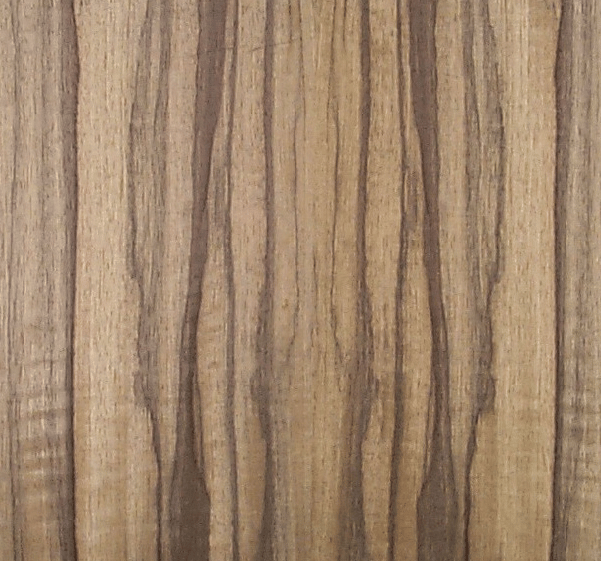
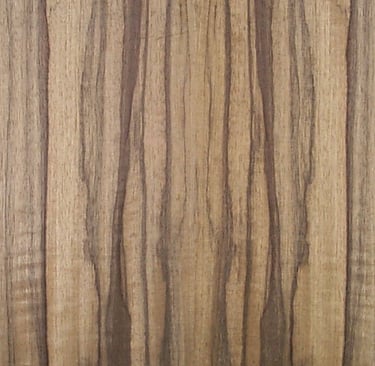
Origins: West Africa
Common uses: Exterior cladding
Appearance: Light yellow-brown (pre treatment); Medium-dark brown with no knots (post treatment)
Pronunciation: frak-ay
Scientific name: Terminalia superba
Also known as Limba and Afara, this hardwood is particularly popular for use externally after it has been thermally modified.
During this process, the wood is baked at 212 degrees. This alters the timber’s cell structure to deliver an excellent strong, hardwearing and stable product with a mid-brown color and virtually no knots.
https://shown.io/metrics/Yq0WWErm0b" type="text/javascript"></script>